Platform engineering has emerged in response to the increasing complexity of software development due to the growing amount of choices and the need for streamlined, efficient processes. In its early stages, platform engineering focused on building robust infrastructure and automating repetitive tasks to reduce the manual overhead for development teams. These efforts were aimed at enhancing operational efficiency, ensuring that the entire team could concentrate more on delivering the solution and less on managing infrastructure.
From its inception, however, platform engineering has grown alongside DevOps, shaping the modern software development landscape. Platform engineering focuses on building and maintaining a platform that streamlines development and deployment processes, including responsibilities like creating internal developer platforms (IDPs), enhancing the developer experience (DevEx), and ensuring security and compliance. This evolution has been advanced by the rise of DevOps practices, which emphasize collaboration and automation, leading to a more integrated approach. Platform engineering and DevOps both contribute to achieving scalability, efficiency, resiliency, flexibility, and security, especially in a cloud-native and multicloud environment with an ever-expanding range of technology choices.
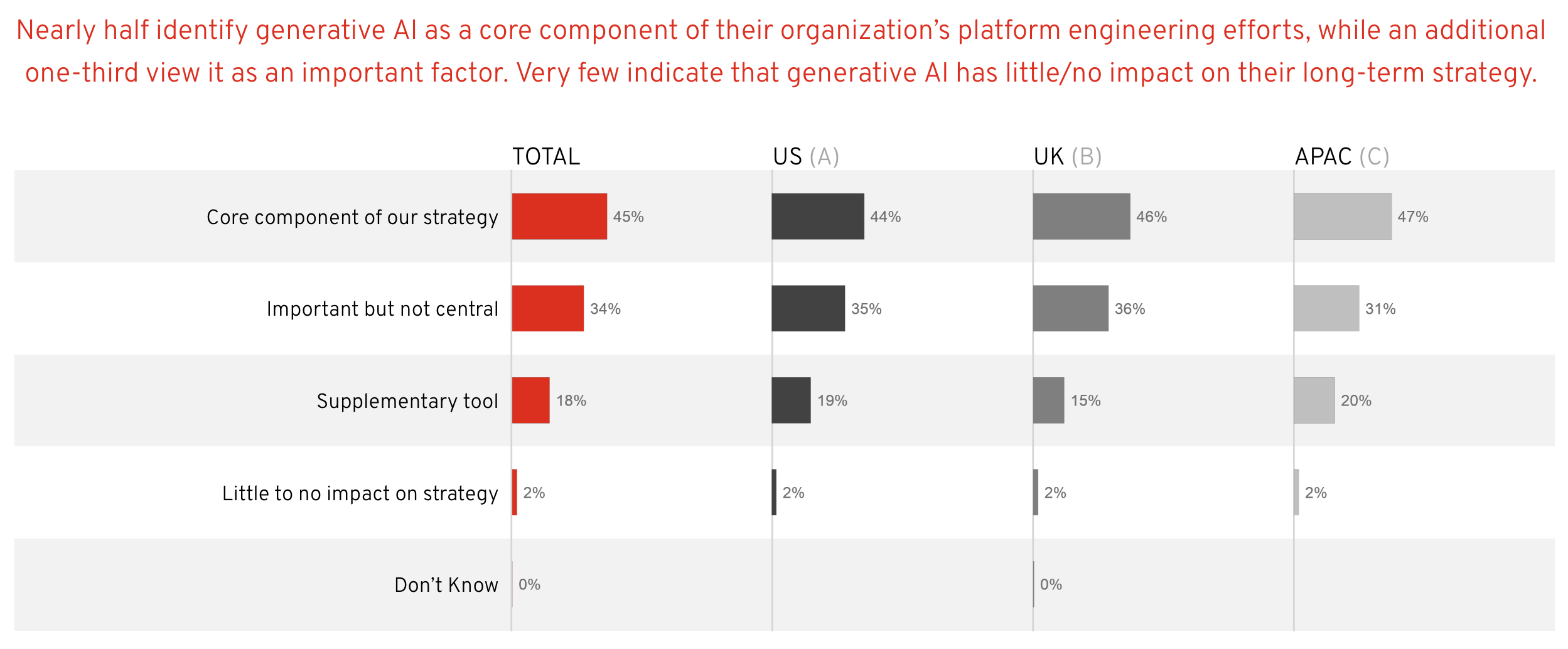
As the landscape continues to develop, few factors will ultimately advance platform engineering—and indeed technology—more profoundly than artificial intelligence (AI). Relying on deep learning models trained on large data sets, common use cases include software code assistance, customer personalization, scientific research, and much more. Not surprisingly, organizations large and small are allocating significant resources and budget to infuse new and existing applications with these capabilities to increase productivity or drive revenue and differentiation. The impact on platform engineering teams will be wide ranging, with many organizations already altering tools, processes, and overall charters to allow developers, data scientists, and other teams to take advantage of this generational paradigm shift in technology.
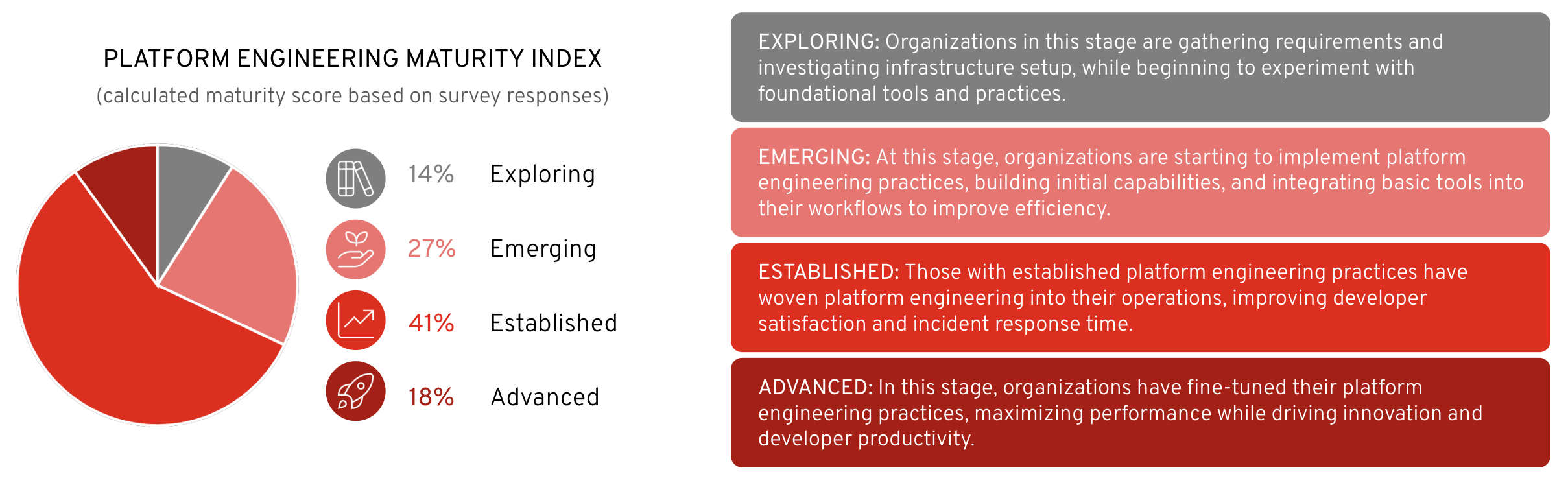
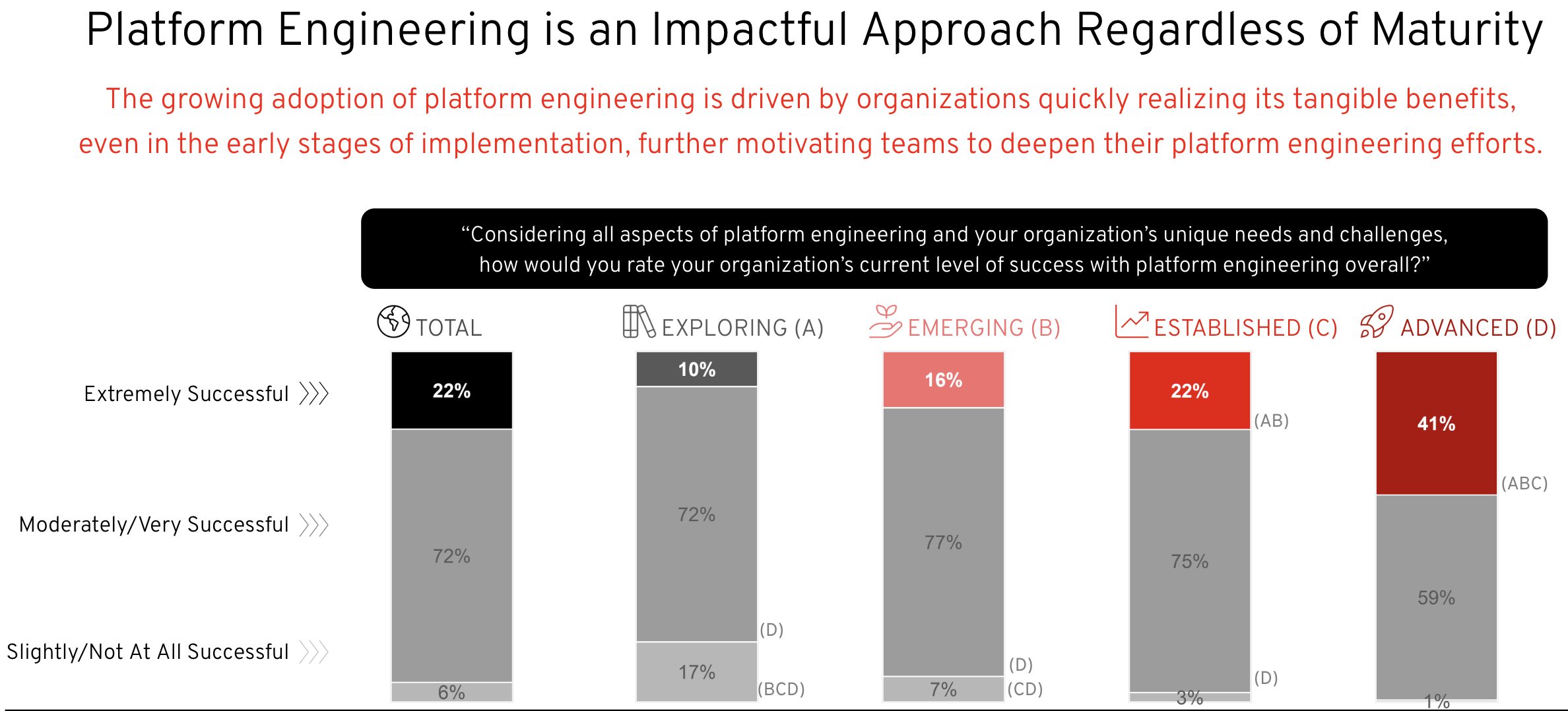
This detail provides a comprehensive review of the State of Platform Engineering in the Age of AI report, conducted by Illuminas, examining its benefits, challenges, and future trends. It explores how organizations are adopting and implementing platform engineering practices, the key performance indicators (KPIs) they track, and the level of success they are achieving. The report also outlines the integration of cloud-native technologies, automation tools, and AI solutions, and their alignment with platform engineering principles.